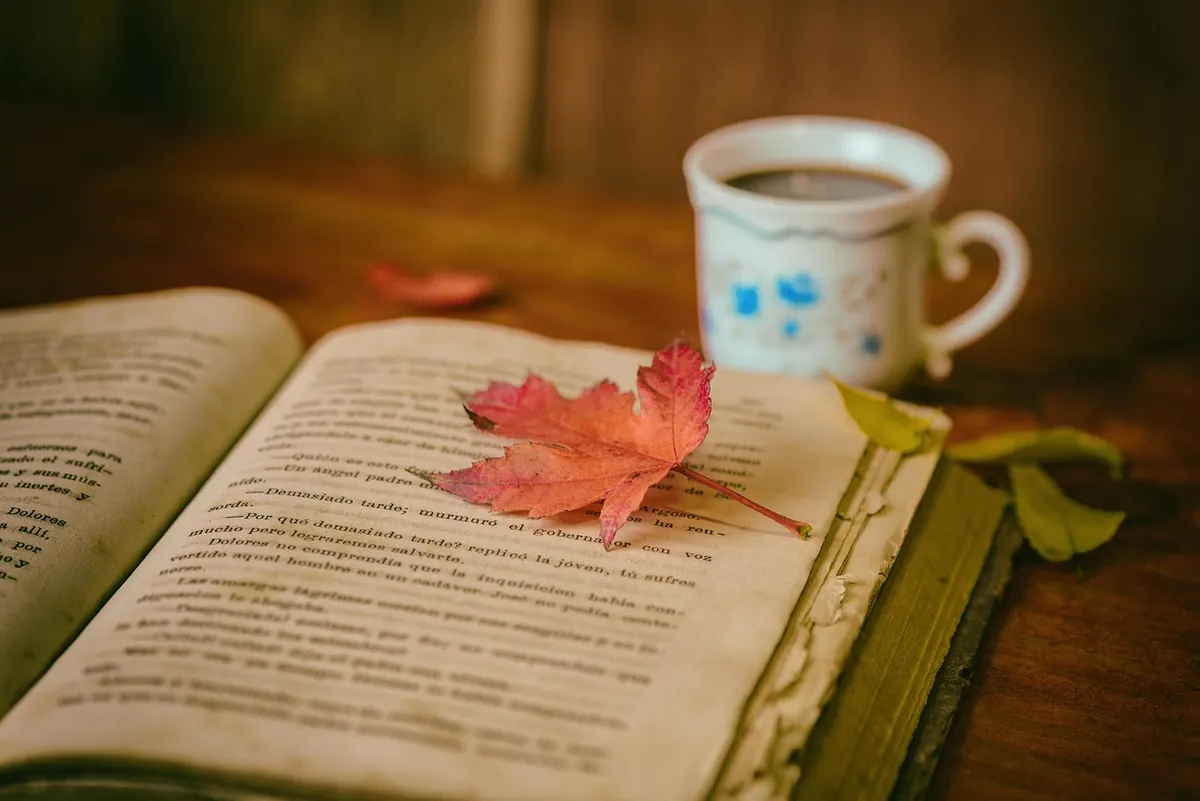
A Beginner's Guide to British Nature Writing: 10 Essential Books to Start With

British nature writing has a reputation for being beautiful and slightly forbidding: shelves of slim volumes with woodcut covers, blurbs promising lyricism, and a canon stretching from an eighteenth-century Hampshire parson to a Cumbrian shepherd. It can feel like a club with an unusually long waiting list and no printed membership rules. You do not need to work through it in order. You need a handful of books that suit how you actually like to read, and a rough idea of which writers do which job: some are companions, some are guides, and a few will quietly rearrange the furniture in your head.
The ten below are a starting point, not a syllabus. They are listed roughly from plainest to most demanding, though "plain" here means short chapters and ordinary sentences rather than simple ideas. Several are quietly difficult; they are just difficult in an unhurried way. Read them in any order, abandon any of them halfway, and do not feel obliged to enjoy the ones everyone else enjoys.
What Counts as British Nature Writing
The term is a catch-all. It takes in field diaries, walking narratives, memoirs, farming accounts, reportage about rewilding, and entire books about one field. The thread running through them is that the natural world is the subject rather than the scenery. In a novel, a moor can be a mood; in nature writing, the moor is the argument.
"British" is loose as well. It usually means writers working in these islands, which brings in the Scottish Highlands of Nan Shepherd, the Orkney of Amy Liptrot, and the Welsh borders of John Lewis-Stempel. Plenty of readers include Irish writing and reach across the Atlantic for Thoreau, Aldo Leopold and Annie Dillard, who are the ancestors of the whole genre whether or not they fit the label.
Nor is it all pastoral consolation. Some of the best of it is about illness, grief, addiction, money and class — about what happens to people and places when the land is worked, sold, drained or abandoned. A good half of these books are really books about loss, with a great deal of weather in them.
"The thing to be known grows with the knowing."
Nan Shepherd, The Living Mountain
The Ten Books, Roughly in Order of Difficulty
- The Natural History of Selborne — Gilbert White (1789). A country parson writes letters to two fellow naturalists about his Hampshire parish: hirundines, earthworms, a tortoise named Timothy. The chapters are short, the tone is gossipy, and it was written a century before Darwin. Read a letter at a time.
- Notes from Walnut Tree Farm — Roger Deakin (2007). Diaries and fragments from a Suffolk smallholding: swimming, wood, moths, the moat. Written on scraps of paper and never intended as a book, which is exactly why it works. A perfect bedside volume.
- Nature Cure — Richard Mabey (2005). A memoir of severe depression and slow recovery, and of moving to Norfolk to look at plants. Refreshingly unwilling to claim that the countryside cured him. Honest, wry and botanically precise.
- Findings — Kathleen Jamie (2005). Essays from Scotland: a whale skeleton, a remote island, a peregrine, a hospital scanner. Jamie is exact and unsentimental, and she writes about people and nature in the same breath rather than keeping them apart.
- Meadowland — John Lewis-Stempel (2014). One field, one year, in Herefordshire, farmed deliberately for wildlife. Short, seasonal chapters that show how much happens in a place you would drive past without noticing.
- Wilding — Isabella Tree (2018). The story of Knepp, a failing Sussex dairy farm turned over to free-roaming animals and whatever wanted to arrive. Reportage as much as lyricism, and a useful book to have read when the argument about land use starts.
- The Living Mountain — Nan Shepherd (written 1940s, published 1977). Not a book about summits. Shepherd spent decades walking the Cairngorms until the mountain became a way of thinking. Short, strange, and much imitated.
- The Wild Places — Robert Macfarlane (2007). A search for what is left of the wild, from Cornish holloways to Highland corries to sea ice. Word-drunk, allusive and deliberately lyrical; if you like it, Landmarks and Underland follow.
- The Outrun — Amy Liptrot (2016). Orkney, addiction, recovery, cold water, corncrakes, a job counting birds and a lot of staring at the sea. Memoir first and nature book second, which is why it moves so fast.
- H is for Hawk — Helen Macdonald (2014). Grief, a goshawk, and T. H. White. The densest and most emotionally demanding book here, and the one that has probably brought more new readers into the genre than any other in the last twenty years.
Difficulty is not quality. The last two entries are page-turners if you happen to like memoirs, and number seven is short enough to read in two evenings even though it repays twenty years of rereading.
How to Read Them Without Getting Stuck
The main reason people bounce off nature writing is that they try to read a diary like a novel. Here are a few habits that help.
- Keep a fragmentary book by the bed. White, Deakin and Shepherd reward five minutes at a time. One entry a night is a legitimate way to read them.
- Read with the seasons. A book about June is better in June. If a chapter is about snow and you are on a hot train, save it.
- Follow the place, not the order. Dozens of these books can be bought as a paperback with a map in the front. Look at it, then look up where you actually are.
- Skip freely. A chapter about fungi, or about the author's divorce, or about a specific beetle may not be your chapter. Missing it is not cheating.
- Copy out one sentence a week. Noting a single good line teaches you more about how this writing works than reading a hundred pages in a rush.
- Read outside occasionally. Even a park bench will do. These books are about attention, and attention is easier to practise than to read about.
Useful Terms You Will Meet
A small glossary, because the blurbs and reviews are full of these and rarely define them.
- New nature writing — a marketing label, roughly from the mid-2000s, for books that mix memoir, travel and natural history. Useful as a shelf, useless as a rule.
- Rewilding — letting land look after itself, often with missing large animals reintroduced. Knepp is the famous British example.
- Deep time — the geological timescale, invoked to make human history look brief. Macfarlane's Underland is full of it.
- Psychogeography — walking as a way of studying a place and its politics, usually in cities rather than hills.
- Anti-pastoral — writing that refuses the pretty version of the countryside and shows the slurry, the subsidies and the monoculture.
Where to Go Next
Once two or three of the ten have landed, the canon widens quickly. In the older British tradition there is Dorothy Wordsworth's Grasmere Journals, Edward Thomas's In Pursuit of Spring, and Richard Jefferies's The Amateur Poacher. Among contemporaries, Mark Cocker's Crow Country, Tim Dee's bird books and Adam Nicolson's The Sea Room are all rewarding.
Poetry is worth adding early, since it is where much of the genre's compression comes from: John Clare, Ted Hughes, Alice Oswald. And if you want the American branch, start with Aldo Leopold's A Sand County Almanac — short essays, an almanac structure, and the clearest statement anyone has written of why any of this matters.
Beyond books, there are magazines and websites devoted to the form, anthologies that do the choosing for you, and radio programmes that have read these writers aloud for decades. Any of them will do. The important thing is to start with one, and to read it slowly enough to notice the weather.
Photo: Pexels / Pixabay